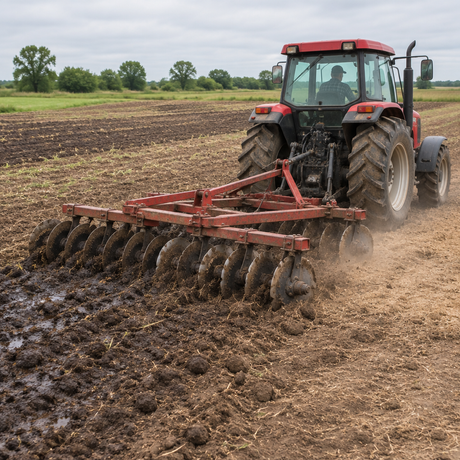
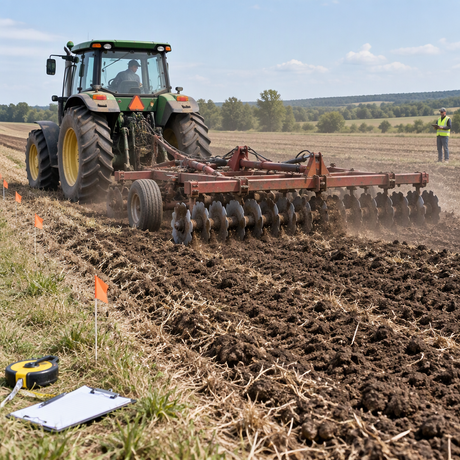
Set disc harrow working depth by matching the field objective to tractor power, implement width, travel speed, draft demand, and soil condition. Because draft force can change with soil moisture and machine speed, avoid choosing depth from a single universal rule. Use a controlled test pass, check tractor load and field finish, then adjust depth or speed gradually before full-field operation.
Why working depth changes tractor load
A deeper disc harrow setting usually asks more from the tractor because the tractor-implement match depends on implement width, operating speed, draft requirement, and soil condition rather than depth alone.
Iowa State University Extension’s farm machinery selection guidance frames tractor sizing around implement size, ground speed, draft requirement, and soil condition, and it warns that insufficient horsepower can accelerate engine wear while excessive horsepower increases ownership cost.
A peer-reviewed compact disc harrow draft-force study also reports that soil moisture content and machine speed affect draft force in its tested setup; use that as a load principle, not as a guaranteed number for every harrow, soil, or tractor combination.
For buyers, the practical point is simple: working depth, width, and speed must be selected together. If the tractor is near its limit, forcing extra depth may reduce field efficiency and increase mechanical strain.
Choose a starting depth by field objective
Choose the first disc harrow working depth from the job goal, then treat it as a starting point that must be confirmed in the field with soil, residue, leveling, and tractor-load feedback.
| Field objective | Initial depth approach | Buyer check before continuing |
|---|---|---|
| Light seedbed preparation or surface leveling | Start conservatively so the discs work the surface without unnecessarily increasing draft. | Confirm the tractor can hold the intended ground speed without signs of excessive load. |
| Residue mixing after harvest | Use enough depth for the residue objective, but adjust in increments because residue, soil type, and moisture affect the result. | Watch load changes when soil moisture or operating speed changes. |
| Deeper soil disturbance | Check tractor capacity, implement width, and field speed before assuming the tractor can pull deeper. | If power reserve is limited, reduce depth, reduce speed, or consider a narrower implement before expanding the setup. |
Depth recommendations on a product or editorial page are general setup guidance. Final depth should be confirmed by the operator’s manual, dealer support, and the field test pass for the actual soil and tractor.
A step-by-step depth setup workflow
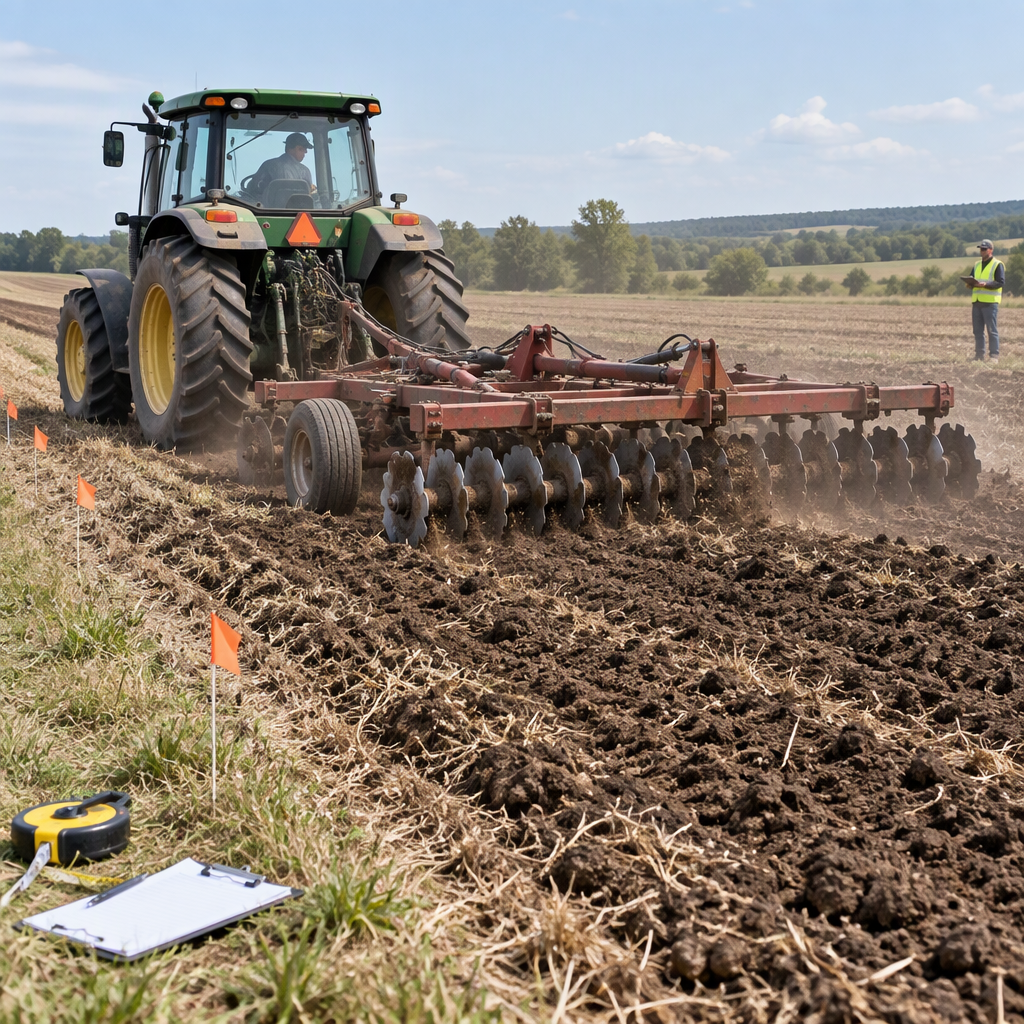
Set disc harrow working depth in small steps: define the job, start shallow, make a test pass, inspect the soil finish, check tractor load, and increase depth only while the tractor remains within a comfortable operating range.
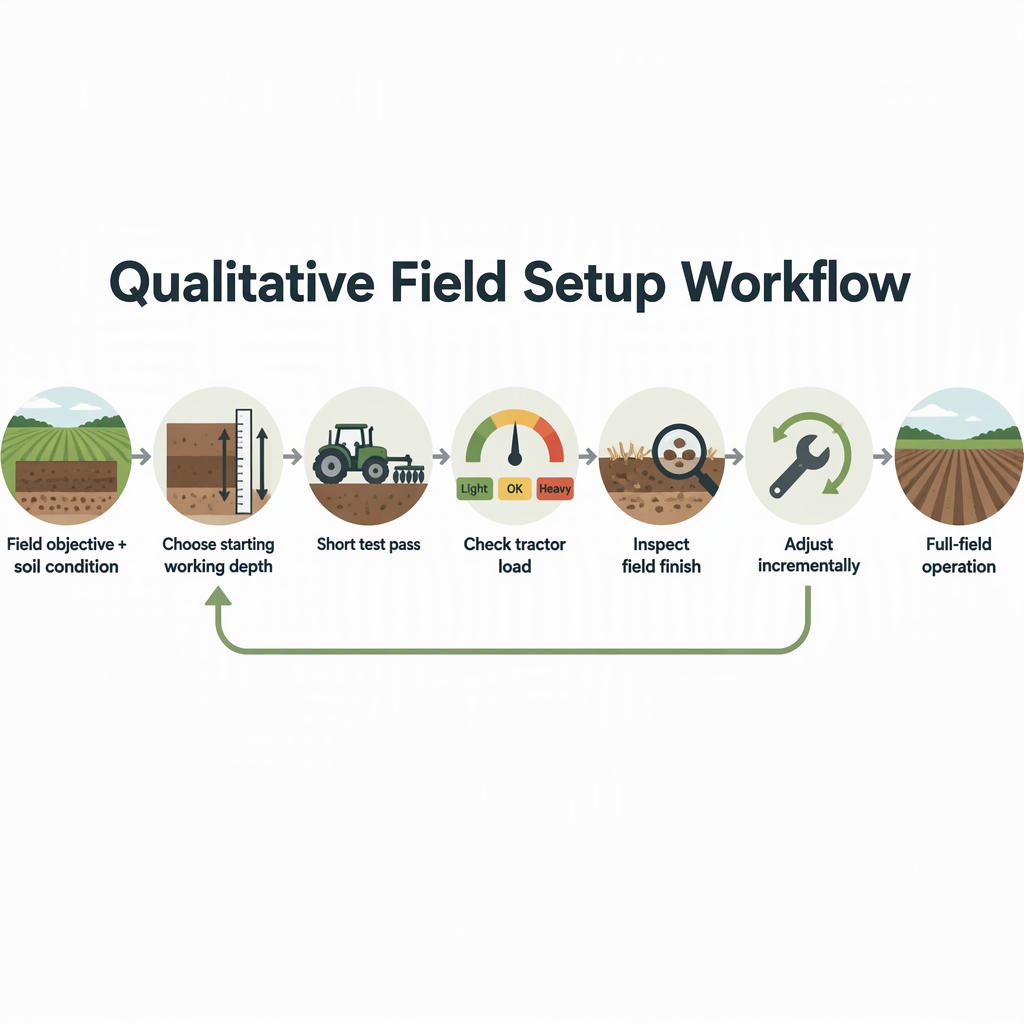
- Define the field objective. Decide whether the pass is for leveling, seedbed preparation, residue mixing, or deeper soil disturbance.
- Match the setup to the tractor before entering the field. Review tractor power, implement width, planned speed, and expected draft demand.
- Start with a conservative depth. Avoid beginning at the deepest desired setting when soil condition, residue load, or tractor reserve is uncertain.
- Make one controlled test pass. Keep speed consistent, because speed and soil moisture can change draft force in compact disc harrow operation.
- Inspect field finish. Check mixing, leveling, ridge formation, and whether the tool is working evenly across its width.
- Adjust one variable at a time. If the result is too shallow but the tractor is comfortable, increase depth gradually; if the tractor labors, reduce depth, reduce speed, or reassess implement size.
- Before measuring near discs, clearing residue, or making manual adjustments, park on stable ground, lower the implement, switch off the tractor, remove the key, set the parking brake, disconnect hydraulic or other power sources as applicable, wait for movement to stop, and follow the model manual’s permitted access points.
- Do not bypass guards, stand between tractor and implement during hitch movement, or improvise disassembly to reach blocked soil or residue.
Check overload signs before continuing
Stop increasing depth when the tractor cannot maintain the intended pass smoothly, because undersized power for the implement can lead to inefficient operation and faster engine wear.
| Field sign | Likely setup issue | Buyer action |
|---|---|---|
| Tractor cannot hold planned ground speed | Depth, width, draft demand, or speed may exceed the tractor’s comfortable match. | Reduce depth first, then reassess speed and implement width before continuing. |
| Load changes sharply after a moisture or speed change | Soil moisture and machine speed can affect draft force. | Repeat the test pass under the current condition rather than relying on the previous setting. |
| Uneven finish or inconsistent cutting across the machine | Leveling, soil condition, residue, or equipment setting may not match the field objective. | Recheck leveling and depth setting using the manufacturer’s guidance before forcing a deeper pass. |
A tractor that is too large for the job can also be uneconomical. The selection target is not maximum horsepower; it is the right combination of tractor, implement width, draft load, speed, and operating objective.
Adjust before upsizing or forcing depth
Before buying a larger disc harrow or forcing deeper operation, compare whether depth, speed, width, field timing, or machine leveling is the real constraint.
| Adjustment | When it helps | Limit |
|---|---|---|
| Reduce working depth | Useful when the tractor struggles but the field objective can still be met with a shallower pass. | May not provide enough residue mixing or soil disturbance for the intended job. |
| Reduce operating speed | Useful when speed is contributing to higher draft force in current field conditions. | Lower speed can reduce field capacity, so acreage and timing still matter. |
| Choose a narrower implement | Useful when the tractor cannot handle the desired width, speed, and draft load together. | May require more passes to cover the same field area. |
| Recheck leveling and setup | Useful when poor field finish is caused by adjustment rather than lack of depth. | Model-specific procedures should come from the official operator manual or supplier support. |
For procurement, a larger implement is not automatically better. If width increases faster than tractor reserve, the buyer may lose speed, field capacity, or operating reliability.
Data to confirm before requesting a quote
A useful disc harrow quote should start with tractor, soil, depth, width, speed, and field-objective data, because those variables drive whether the proposed setup is workable.
- Tractor rated power, traction type, ballast condition, and normal operating speed range.
- Desired implement width and expected acres or hectares per operating window.
- Primary job: seedbed preparation, residue mixing, surface leveling, or deeper soil disturbance.
- Target disc harrow working depth, plus the acceptable range if field conditions change.
- Soil texture and expected moisture condition during operation.
- Residue amount, previous crop, and any leveling or finish requirements.
- Any required operator manual, parts, warranty, after-sales, or customization documents for the specific supplier and model.
Ask the supplier for model-specific manuals and matching guidance before purchase. Do not infer horsepower range, certification, lead time, or performance from a general depth article unless the supplier provides those documents for the exact model.
Conclusion
The best decision rule is to set the shallowest working depth that meets the field objective while the tractor maintains the intended speed and load comfortably.
Soil moisture and speed can change draft demand, so a setting that works in one field or season should be checked again when conditions change.
For dealers, farm owners, and implement-pairing buyers, the safest sourcing path is to collect field data, run a test pass, and request model-specific matching information before committing to a deeper or wider setup.
FAQs about disc harrow working depth
These answers address the most common buyer questions about setting disc harrow working depth without overloading the tractor.
Can one universal horsepower-per-foot number define disc harrow working depth?
No. Tractor matching depends on implement width, speed, draft requirement, and soil condition, so a single horsepower-per-foot shortcut should not replace a field-specific match.
Why does travel speed matter when depth stays the same?
In a compact disc harrow draft-force study, machine speed was one factor affecting draft force, so buyers should treat speed as part of the load setting rather than only a field-capacity choice.
Should depth be changed after rain or irrigation?
Recheck the setting after a major moisture change because soil moisture can affect draft force. Make another short test pass before returning to full-field speed.
Is deeper always better for crop residue mixing?
No. Residue mixing depends on the field objective, residue condition, soil type, moisture, equipment setup, and leveling. Use only enough depth to meet the agronomic goal while keeping the tractor within a workable load range.
How does depth affect field capacity planning?
Depth can influence the practical speed and implement match. If the tractor must slow down to pull the chosen depth, the buyer should reassess width, horsepower match, and operating window.
What safety step comes before manual depth adjustment or residue clearing?
Before manual access, park on stable ground, lower the implement, switch off the tractor, remove the key, set the brake, disconnect hydraulic or other power sources as applicable, wait for movement to stop, and follow the official manual for the specific model.
What should a dealer ask before quoting a disc harrow?
Ask for tractor power and traction details, intended implement width, target operating speed, soil condition, working-depth goal, residue level, and the field objective so the proposed setup can be matched to real operating conditions.