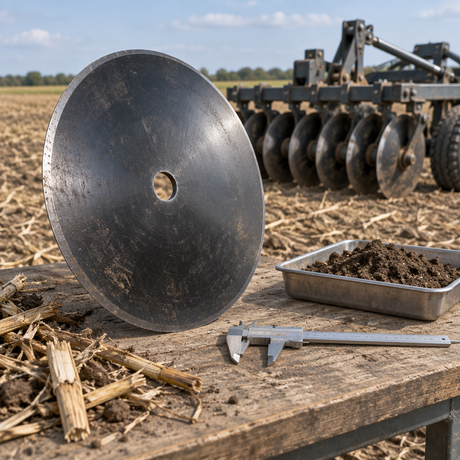
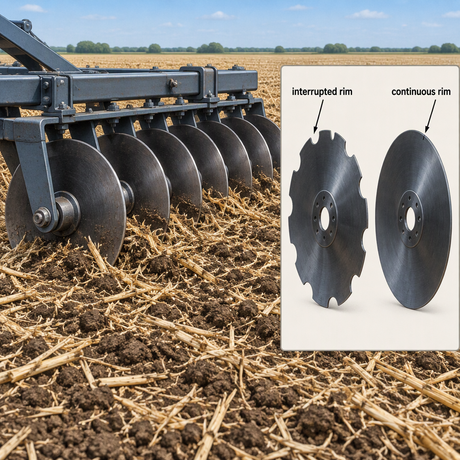
Gang angle is the angle each row of discs — a gang — makes with the direction of travel, and it sets how hard a disc harrow cuts and how far it throws soil sideways. Front and rear gangs are often built differently: the DADI 1BJX medium-duty disc harrow carries scalloped discs in front and plain discs behind. Usable values are machine-specific, so take permitted positions and torque from your own manual or the manufacturer.
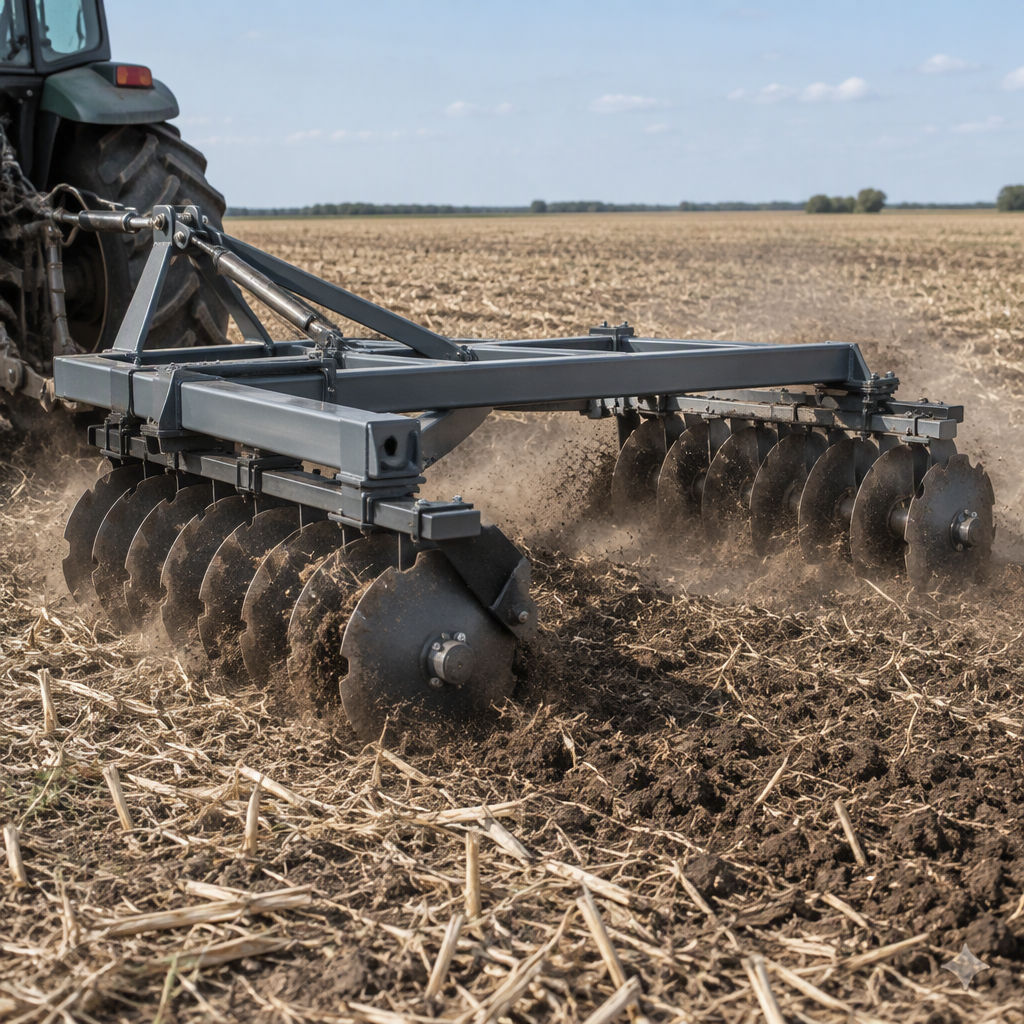
What to Confirm Before You Loosen Any Gang Hardware
Isolate the machine before any manual access: park on firm, level ground, lower the harrow, switch off the tractor, remove the key, release hydraulic pressure and chock the wheels. Then use the machine's operation and maintenance instructions to confirm that a gang adjustment is permitted, the hardware involved, the positions allowed and the tightening torque.
- Machine isolated: harrow on the ground, engine off, key out, hydraulic pressure released, wheels chocked.
- Manual open at the adjustment, torque and depth sections; only the positions it lists are permitted.
- Adjustment provision confirmed: if the manual covers no gang adjustment, leave the mounting as built and ask the manufacturer or dealer.
- Hardware checked: bolts, clamps, spacers and discs; replace worn or seized parts rather than forcing them.
- Baseline recorded — the current gang position marked, measured or photographed — with safety glasses, gloves and safety footwear worn.
How to Adjust the Gang Angle: A Manual-Led Sequence
Work in the order the manual gives, moving one gang one permitted position at a time, with the machine isolated and the gang supported so it cannot shift while the hardware is loose.
- Isolate and support: harrow on firm, level ground, engine off, key out, hydraulic pressure released, wheels chocked, gang supported as the manual specifies.
- Identify from the manual the bolts, clamps or arms the adjustment covers, the permitted positions and each fastener's torque.
- Mark the baseline with a paint mark, measurement or photo.
- Loosen only the named hardware, move the gang to the next permitted position, and keep both ends even and the two gangs matched.
- Tighten to the manual's torque and sequence, renewing lock nuts or locking washers where specified.
- Remove the supports, check the discs turn freely, then run a short low-speed test pass, re-check the torque and record the setting.
How to Verify Cutting and Soil Movement After the Change
Compare the same field, depth, working speed and direction before and after, change one thing at a time, and record what you see rather than judging from the tractor seat at working speed.
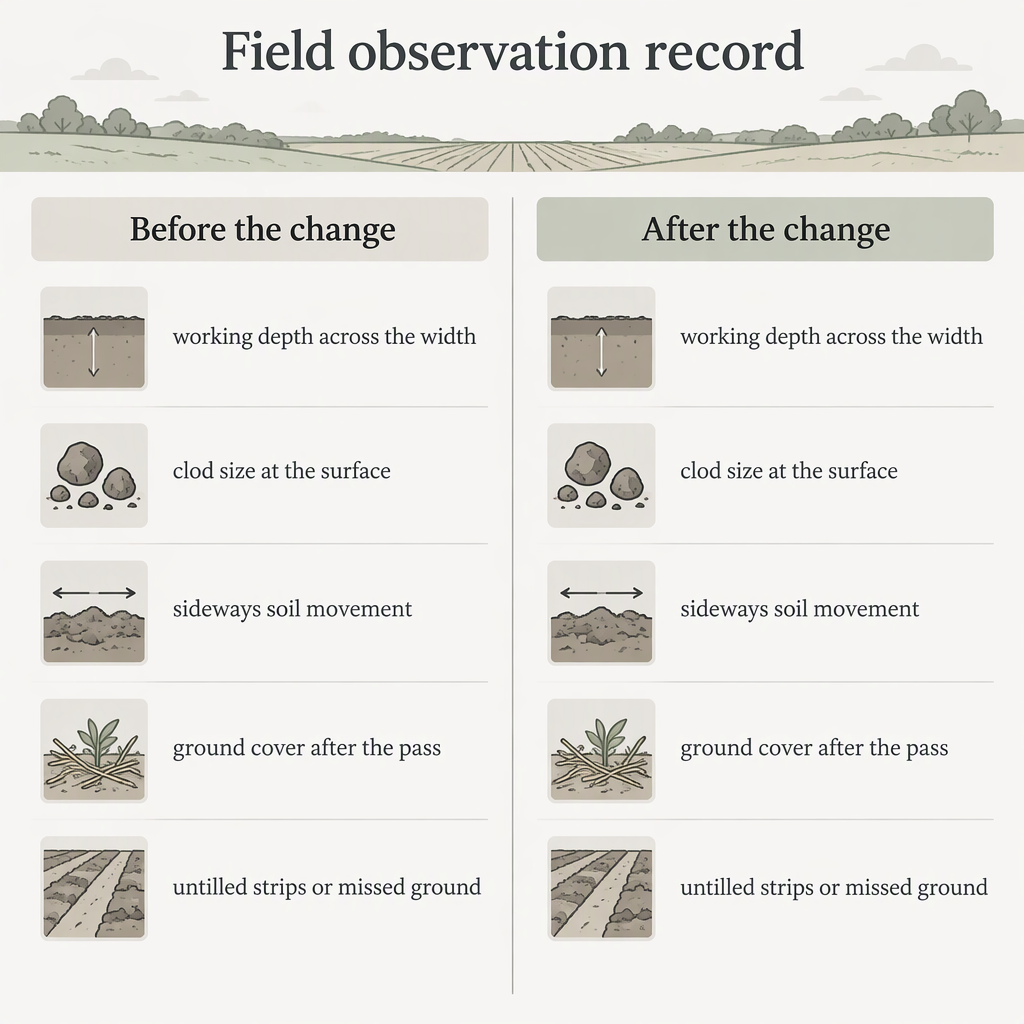
| What to observe | What to record | How to read a difference |
|---|---|---|
| Working depth across the width | Depth at the centre and both outer discs | Uneven depth points to levelling or a mismatched gang. |
| Clod size at the surface | Typical clod size and how many large clods remain | Fewer large clods means more cutting and mixing. |
| Sideways soil movement | How far soil passes the outer disc; ridges or furrows left | More movement levels soil but disturbs more cover. |
| Ground cover after the pass | Surface still covered, estimated the same way each time | Falling cover shows more residue is buried. |
| Missed ground or untilled strips | Where the strip appears: centre, edges or between gang rows | Missed strips point to depth, levelling or disc condition. |
Check depth, levelling and fastenings against the documentation supplied with the machine: DADI Machinery states that its harrows come with supporting operation and maintenance instructions, plus written, video and online remote guidance on operation and daily maintenance.
When a More Aggressive Setting Works Against Your Tillage Goal
A setting that cuts harder and moves more soil also disturbs more surface cover, so it works against residue-retention goals when it becomes routine rather than targeted. The FAO describes conservation agriculture as minimum mechanical soil disturbance, permanent soil organic cover of at least 30 percent and species diversification, with minimum disturbance achieved through direct seed and fertiliser placement.
The FAO's Conservation Agriculture page sets out those three principles and is the reference to check if minimum disturbance and cover retention are farm goals.
What to Send a Supplier Before You Adjust, Repair or Reorder
Send the machine's identity with the job it has to do: model and type, working width, tractor horsepower, soil and residue conditions, quantity and destination. DADI Machinery asks buyers for product type, tractor horsepower, working width, quantity and destination so its team can recommend models and prepare a quotation. The light-duty 1BQX series, for example, is described for loosening clods after ploughing and preparing land before sowing.
| Situation | What to do | What to include |
|---|---|---|
| The manual gives no gang setting for your model | Ask the manufacturer or dealer for the adjustment procedure and permitted positions in writing | Model and type, working width, photos of the gang mounting |
| Adjustment hardware is seized or missing | Stop; do not force the fastener or substitute a different part | Photos of the parts, the manual's parts reference, quantity needed |
| You are comparing a different harrow | Ask for a recommendation against your working conditions | Working width, tractor horsepower, soil type, residue level, depth, destination |
- Keep with the machine: model, type and manual revision, the current gang setting with a photo, the torque figures used and the part numbers of anything replaced.
- Keep the field record: soil condition, residue level and working depth for each setting tested.
- Keep the supplier's written answer with the machine.
Conclusion
Gang angle decides how hard a disc harrow cuts and how far it moves soil, but the usable values belong to your machine: isolate the tractor before any manual work, follow the manual's positions and torque, change one thing at a time and verify under the same conditions. If the manual does not cover the setting, ask the manufacturer or dealer.
Frequently Asked Questions
Dealers and operators ask these questions most often about gang angle: whether the setting can be changed, how to choose a value, how to verify a change, and the safety and residue trade-offs.
Should I change the gang angle on my harrow at all, or is it fixed?
Whether the gangs can be moved depends on the model: some designs offer set positions, others keep the angle they were built with. If your manual lists permitted gang positions and the hardware to loosen, the setting can be changed within those limits. If it does not, leave the mounting as built and ask the manufacturer or dealer.
What angle in degrees should I set for my soil type?
There is no universal number to copy, because a usable angle depends on the machine: disc diameter and spacing, gang spacing and frame design all interact with soil and residue. Take the permitted positions from your harrow's manual, or ask the manufacturer for your model.
How do I know the change actually improved cutting and soil movement?
Compare like with like: the same area, depth, speed and direction, with one change at a time. Keep the setting only if the record improves and the machine still runs steadily.
Can I adjust the gangs while the harrow is lifted on the tractor?
No. Lower the harrow to firm, level ground, switch the tractor off, remove the key, release hydraulic pressure and chock the wheels before going near the discs. Never work under a machine held up by hydraulics.
Do I need to re-tighten the gang hardware after adjusting?
Yes. Reset fasteners can settle once the harrow works, so re-check the torque after the first short test pass using your manual's figures and sequence, renewing any lock nuts or washers it specifies.
Does a steeper gang angle need more tractor power?
How much the tractor load changes depends on the machine, working depth and soil, so do not rely on a general rule. If the tractor cannot hold the pass, becomes unstable or slips, stop, return to the previous setting and take the limit up with the manufacturer or dealer.
Will a steeper setting bury more crop residue?
A setting that moves more soil also disturbs more surface cover, which is why conservation agriculture — minimum mechanical soil disturbance, permanent cover of at least 30 percent and species diversification, as the FAO describes it — treats repeated aggressive tillage as a step away from its aims.