Smooth disc edge
A smooth edge suits normal soil movement, leveling, and finishing conditions where residue is not the main cutting challenge.
Use it when the buyer’s main concern is a more uniform seedbed rather than aggressive residue chopping.
Views: 0 Author: Site Editor Publish Time: 2026-11-27 Origin: Site


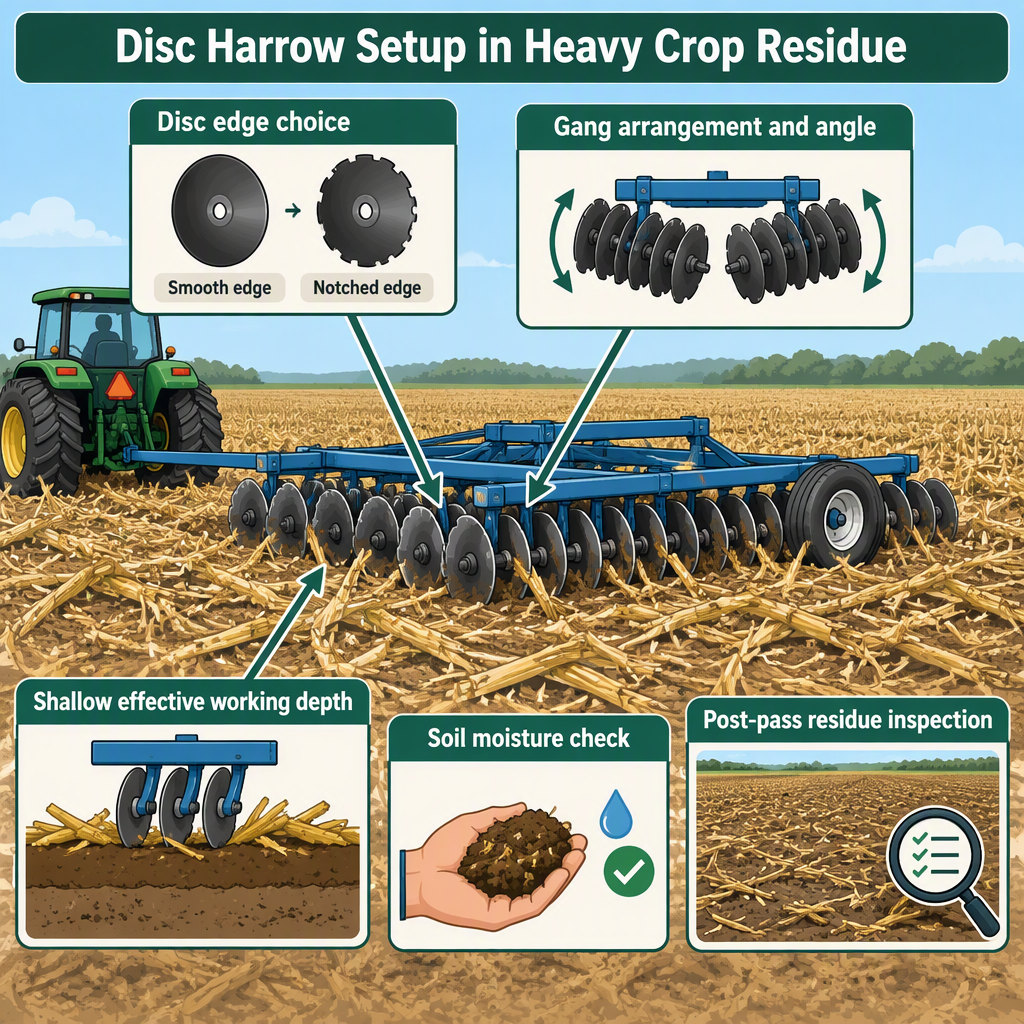
For heavy crop residue, set up a disc harrow by checking residue load, soil moisture, erosion risk, disc edge, gang arrangement, working depth, and the result after the first pass before making the machine more aggressive.
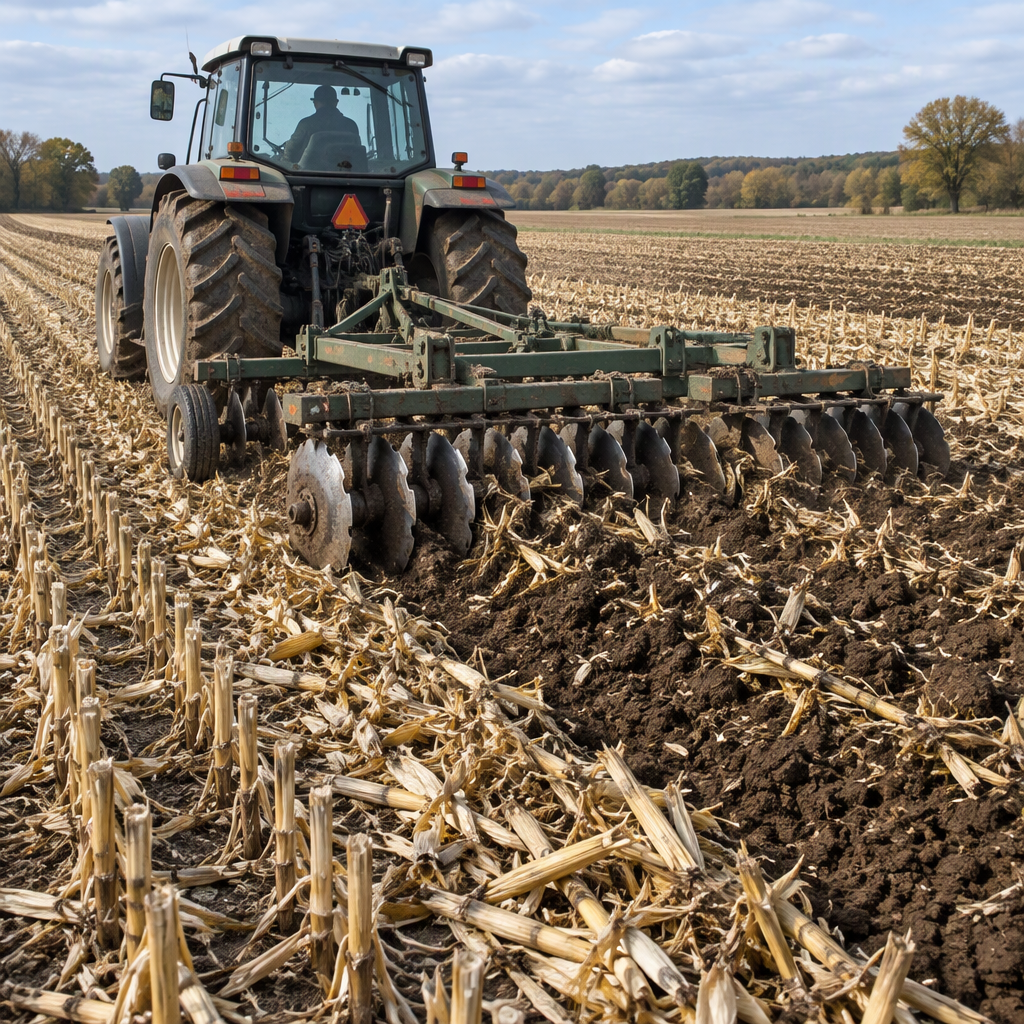
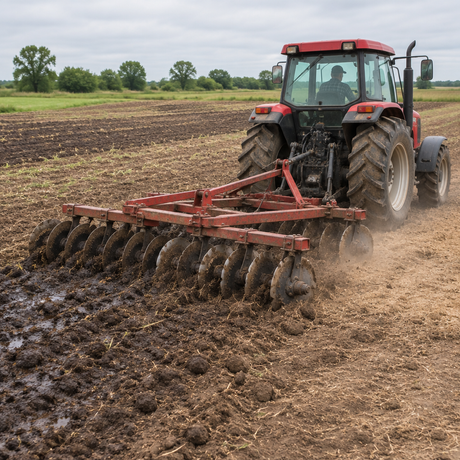
Before changing a disc harrow setting, define what the pass must do: cut residue, mix part of it into the soil, leave enough cover for erosion control, or prepare a more uniform seedbed.
Scalloped discs are generally the stronger choice when residue cutting is the priority, while smooth discs are better suited to ordinary leveling and finishing work.
A smooth edge suits normal soil movement, leveling, and finishing conditions where residue is not the main cutting challenge.
Use it when the buyer’s main concern is a more uniform seedbed rather than aggressive residue chopping.
A scalloped edge can help cut and chop weeds and crop residues in heavy-residue conditions.
Use it when the field has stalks, cover-crop biomass, or tough surface residue that must be opened before planting or follow-up tillage.
Disc edge choice is only one part of disc harrow residue management; the same edge can perform differently when gang angle, working depth, travel conditions, and soil moisture change.
Treat gang arrangement, gang angle, and working depth as one system because residue cutting and soil movement depend on how the concave discs meet the soil at an oblique angle.
| Setup factor | Use in heavy residue | Buyer check before quoting |
|---|---|---|
| Single-action arrangement | Moves soil in one main direction and may be considered where a lighter disking action is acceptable. | Confirm whether the field goal is cutting residue only, or cutting plus more complete mixing. |
| Double-action or tandem arrangement | Uses opposing gangs to work soil in both directions, which can support more mixing and leveling than a single gang pass. | Ask whether the buyer needs residue incorporation, a more level seedbed, or a reduced number of operations. |
| More aggressive gang angle | More angle generally increases soil movement and cutting action, but can also bury more residue and increase draft demand. | Request the supplier’s permitted adjustment range for the exact model rather than assuming a universal angle. |
| Working depth | Use the shallowest effective depth that cuts and mixes residue for the seedbed goal, because deeper operation changes residue cover and soil disturbance. | Provide residue type, desired finish, and tractor match so the supplier can recommend a suitable configuration. |
A first pass should prove whether the setup cuts residue and leaves the intended cover before the operator increases depth, angle, or pass count.
Do not use a disc harrow in heavy residue when the soil is too wet to crumble, because wet-soil disking can create clods, compaction, and uneven mixing.
This matters in residue management because the buyer is usually balancing two goals: opening the residue mat enough for planting or follow-up tillage, while avoiding a rough, compacted seedbed that needs more correction later.
A disc harrow can be adjusted to cut more aggressively, but conservation goals may require leaving more residue on the surface instead of burying it.
NC State Extension’s disk tillage guidance explains the relationship among disk equipment, residue cover, erosion-control opportunity, disc edge, and wet-soil risk.
For farms working under a conservation plan, the USDA Natural Resources Conservation Service provides official resources for Residue and Tillage Management, No-Till Code 329; confirm the applicable current document and local plan requirements before changing residue levels.
For procurement, this means the RFQ should not only ask for a heavier or more aggressive disc harrow. It should also state the residue-cover goal, soil conservation constraint, and whether the machine will be used before planting, after harvest, or as part of a broader tillage system.
DADI MACHINERY can be discussed as a disc-harrow category supplier only in general terms unless the buyer requests the exact model specification sheet for dimensions, tractor match, and options.
Dealers and implement buyers should therefore treat the setup principles in this guide as the field-application brief, then request model-specific documents before matching an implement to a tractor and residue-management program.
A useful disc harrow RFQ for heavy residue should describe the field problem first, then ask the supplier to match the machine configuration to that problem.
The best disc harrow setup for heavy crop residue is not the most aggressive setting; it is the least aggressive setup that cuts residue, meets the seedbed target, protects soil condition, and fits the conservation goal.
Use general setup principles to define the field requirement, then ask DADI MACHINERY or another supplier for model-specific data before final tractor matching, configuration selection, and purchase approval.
These answers help buyers turn field conditions into practical setup and RFQ questions.
No. Residue cover, residue type, soil moisture, gang setup, working depth, weather, and follow-up operations all affect the result, so buyers should not treat a disc harrow as a yield or seedbed guarantee.
They are usually more suitable when cutting residue is the priority, but the final choice still depends on soil condition, seedbed target, gang setup, and the exact implement design.
Specify the residue and seedbed objective instead of a universal depth. Use the shallowest effective depth that cuts and mixes residue enough for the next operation.
Plan one evaluated pass first. Add another pass only if the field result justifies the extra soil disturbance and residue reduction.
Wet-soil disking can create clods, compaction, and uneven incorporation, which may make the seedbed harder to correct later.
If a farm follows a conservation plan, confirm the applicable residue and tillage requirements with the current official documents and local adviser before reducing surface cover.
Choose only after the supplier reviews the crop residue, soil condition, tractor data, working-width target, and required model specification sheet.
Ask how to inspect discs, bearings, scrapers, fasteners, and wear parts for the exact model, and require safe procedures that isolate tractor and hydraulic energy before manual clearing or inspection.