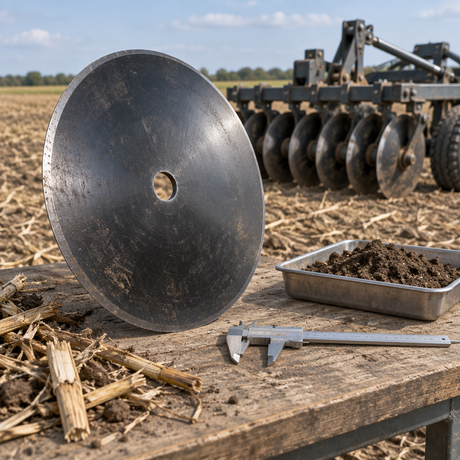
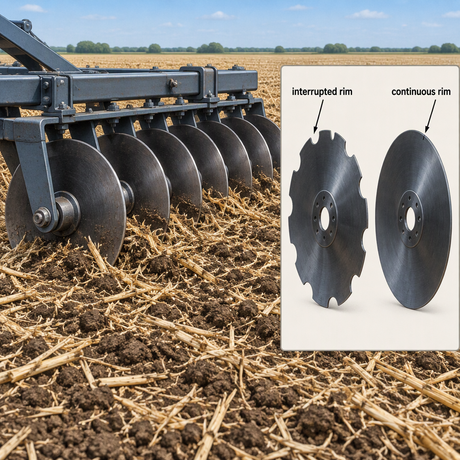
Disc blade diameter and thickness affect tillage and wear as part of a system, not as stand-alone guarantees: DADI Machinery lists disc blade options from 12–32 inches in diameter and 3–12 mm in thickness, while tillage intensity can be evaluated as soil disturbance rather than blade size alone and disc harrow component wear is a material issue because stress over time can reduce tillage performance and service life.
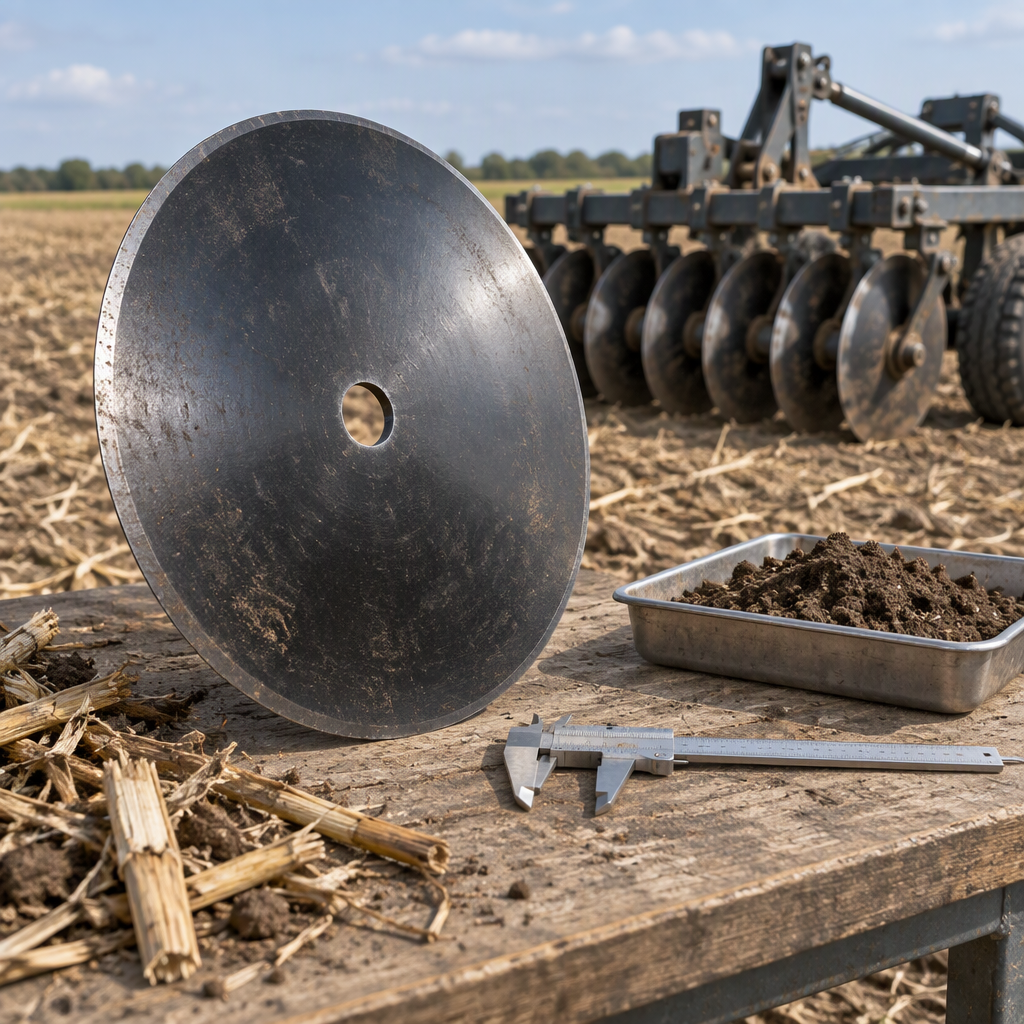
Start with the application inputs, not a universal blade size
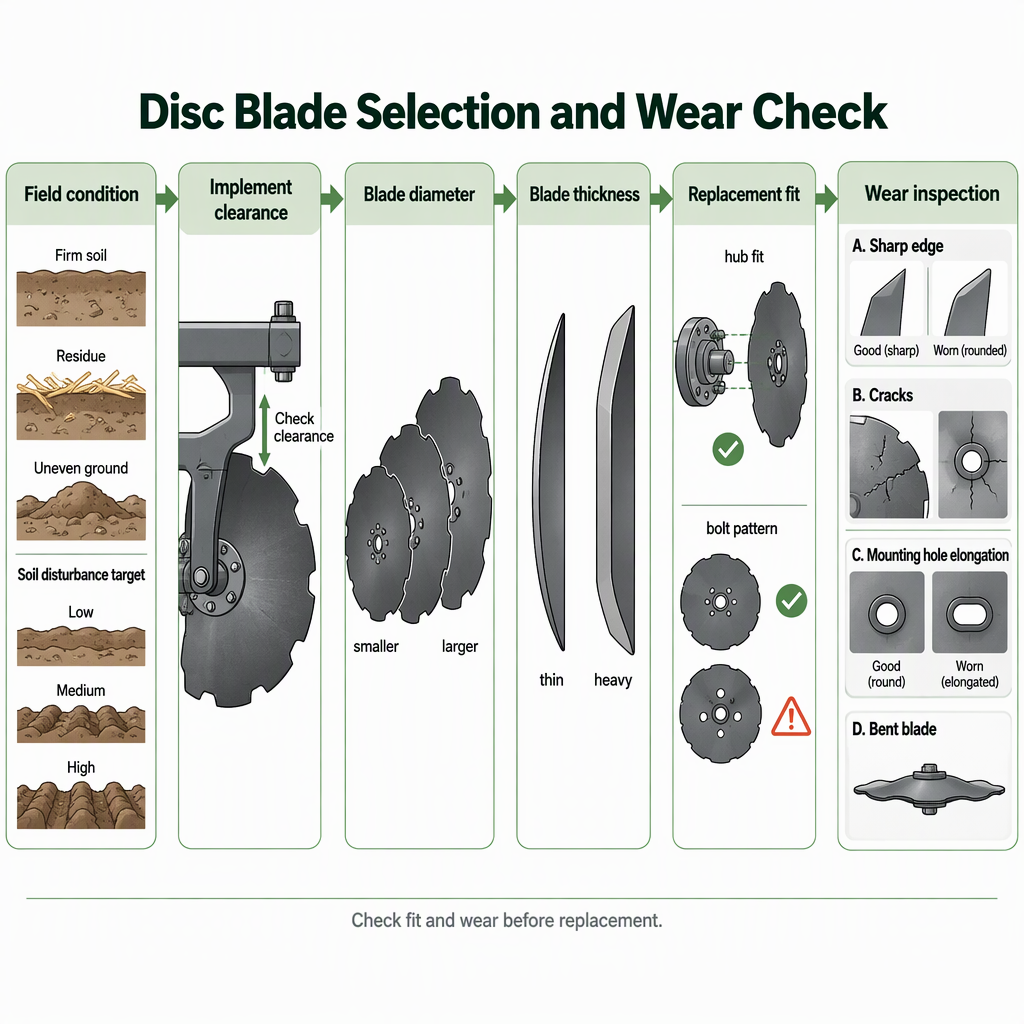
Choose disc blade diameter and thickness after collecting the field, machine and replacement-fit inputs that control how the blade will work in your operation.
- Record the blade type required by the implement: notched, plain, smooth or flat are among the disc blade types listed by DADI Machinery.
- Confirm the available diameter and thickness range before discussing fit; DADI Machinery lists 12–32 inch diameter options and 3–12 mm thickness options.
- Describe soil texture, moisture window, crop residue, target seedbed condition and whether the work is primary tillage, finishing or residue mixing.
- Match the blade discussion to the tractor, harrow frame, gang angle, bearing arrangement, axle size, spacer layout and existing clearance.
- For replacement buying, keep one used blade and one current drawing or measurement sheet as the baseline instead of changing diameter and thickness at the same time.
How diameter affects soil engagement and working depth
A larger diameter should be treated as a soil-engagement and machine-fit variable, not as a promise of deeper or better tillage in every field.
| Selection question | What to check | Buyer decision |
|---|---|---|
| Will the blade physically fit the implement? | Check frame clearance, gang spacing, axle and bearing compatibility before increasing diameter. | Do not upgrade diameter until the machine geometry supports it. |
| What tillage intensity is required? | The USDA describes T-DISC as a tool for generating a soil disturbance metric for consistent determination of tillage-operation intensity. | Use the intended disturbance level as a selection input, not only the nominal blade size. |
| Is the size inside the available product range? | DADI Machinery lists a diameter range of 12–32 inches for its disc blade page. | Discuss the exact diameter with the supplier against the implement model and field requirement. |
Avoid choosing the largest available blade simply because the field is heavy. If the frame, tractor power, gang setup or working-speed target cannot support the change, the result may be poor penetration control, uneven finish or premature component stress.
For a neutral way to frame tillage intensity, buyers can review the USDA page on Tillage Disturbance Index for Soil Carbon; use it for the disturbance concept, not as a disc blade sizing formula.
How thickness affects wear, machine compatibility and fit
Blade thickness matters most where soil abrasion, residue load, impact risk and replacement fit affect how long the blade can hold its working shape.
| Thickness choice factor | Why it matters | What to verify |
|---|---|---|
| Available thickness range | DADI Machinery lists 3–12 mm thickness options for disc blades. | Ask which thicknesses match the blade diameter, hole pattern and implement fit. |
| Wear environment | Disc harrow components can experience mechanical and physical stress over time, reducing tillage performance and service life. | Describe abrasive soil, stones, residue and working hours so the supplier can recommend a suitable option. |
| Machine compatibility | Thickness can affect weight, clamping, gang spacing and replacement interchangeability. | Confirm the original blade thickness, spacer stack and bearing load limits before changing specification. |
Do not assume the thickest blade is automatically best. A thicker blade that does not match the gang assembly may create fit problems, while a blade that is too light for abrasive or high-residue conditions may need earlier inspection and replacement.
Replacement check: measure before changing the specification
For replacement purchases, measure the existing blade and the implement interface before changing diameter, thickness or blade type.
- Park the tractor and implement on level ground, lower or securely support the implement, switch off the tractor, remove the key and isolate any electrical or hydraulic power before manual access to the blade area.
- Measure the current blade diameter at several points because worn discs may no longer be round enough to represent the original size.
- Measure thickness away from badly worn edges, then compare it with the original specification or a new sample if available.
- Record center hole size, bolt hole count, bolt circle, concavity, notch style and any stamped part number.
- Compare the measured requirement with the available DADI Machinery disc blade types and the listed 12–32 inch and 3–12 mm range.
- Change only one major variable at a time during trial replacement when possible, so field results can be attributed to the change.
- Photograph the old blade on both sides.
- Keep notes on tractor power, typical working depth, soil condition and crop residue.
- Ask whether the proposed replacement requires different fasteners, spacers or setup checks.
A field-test process for tillage effect and wear observation
A small field trial reduces selection risk by comparing soil effect, machine behavior and early wear under your own working conditions.
- Define the trial goal: residue cutting, clod sizing, surface leveling, mixing intensity, seedbed finishing or replacement durability.
- Install the sample blade only after the implement is secured and energy sources are isolated according to the machine manual.
- Run the sample in a representative field strip at the normal tractor, depth and speed settings.
- Record tillage effect as a disturbance outcome, because tillage intensity can be evaluated as a soil-disturbance metric rather than by blade size alone.
- Inspect for edge wear, bending, cracks, loose hardware and uneven wear patterns because disc harrow components are exposed to mechanical and physical stress over time.
- Compare the sample with the current blade and decide whether the specification should be adopted, adjusted or rejected.
For wear context, Wear Mechanisms of Disc Harrow Blade Assemblies describes component wear as a factor that affects tillage efficiency and agricultural product quality.
RFQ checklist for dealers, farms and implement procurement
A useful RFQ should describe the implement, field conditions and inspection expectations clearly enough for the supplier to recommend a fit-for-use disc blade.
- State that the request is for disc blades or related farm implement parts; DADI Machinery presents disc harrows, disc ploughs, disc blades and other farm implements on its English website.
- Specify blade type, diameter, thickness, material request if applicable, center hole, bolt pattern and quantity; DADI Machinery lists disc blade types, 65 manganese steel and a diameter/thickness table.
- Attach photos, drawings or a physical sample when the implement model is old, modified or locally built.
- Describe soil, residue, tractor, working depth target, seasonal acreage or expected use pattern.
- Ask the supplier to identify any fit limits before production or shipment, especially when changing from the current diameter or thickness.
| If the buyer is… | RFQ emphasis | Reason |
|---|---|---|
| Farm owner | Current implement fit and field result | Reduces risk of buying a blade that works on paper but not on the farm. |
| Dealer | Common local models and replacement interchange | Helps stock choices match customer machines and soil conditions. |
| OEM or implement procurement team | Drawing, tolerance needs and trial approval process | Supports repeatable sourcing without assuming a universal blade size. |
Wear and maintenance signs to monitor after installation
After installation, monitor wear by looking for changes in blade shape, edge condition, fastening security and tillage result before the blade fails or damages related components.
- Before inspection, lower or support the implement, switch off the tractor, remove the key and disconnect or isolate applicable electrical, battery or hydraulic power before reaching near blades or gangs.
- Watch for wear that changes tillage performance, because component wear can reduce tillage performance and service life.
- Check for uneven diameter loss between gangs, cracked edges, bent blades, loose bolts, abnormal bearing noise and poor soil finish.
- Keep a simple log of field, soil moisture, hours, depth setting and visible wear so future purchases are based on actual use.
- Replace damaged blades according to the implement manual and supplier guidance rather than waiting for a blade to break in work.
Inspection is not a reason to bypass guards, work under unsupported equipment or improvise disassembly. Use the implement manual for permitted access points and ask the supplier before altering blade, spacer or gang configuration.
Conclusion
The best disc blade diameter and thickness choice is the one that fits the implement, delivers the required field effect and can be monitored for wear in the buyer's real working conditions.
Use diameter to frame soil engagement and implement clearance, use thickness to frame wear environment and fit, then confirm the choice through measurement, supplier review and a controlled field trial. DADI Machinery's listed range gives buyers a practical specification window to discuss, while soil disturbance and wear over time should remain part of the selection conversation.
FAQs about disc blade diameter, thickness, tillage and wear
These questions help buyers turn blade size options into a specification request that reflects the machine and field.
Does a larger disc blade always work deeper?
No. A larger blade can change soil engagement, but working depth also depends on implement design, tractor match, gang setup, soil and operating conditions.
Is a thicker disc blade always more durable?
Not always. Thickness must match the wear environment and the implement assembly. A thicker blade that does not fit the gang, bearing or spacer arrangement can create other problems.
What diameter and thickness range is listed by DADI Machinery?
DADI Machinery's disc blade page lists 12–32 inch diameter options and 3–12 mm thickness options.
What should I measure before ordering a replacement blade?
Measure diameter, thickness, center hole, bolt pattern, concavity, blade type and the current wear condition; include photos or a sample when possible.
When should I run a field trial?
Run a field trial when changing blade diameter, thickness, type, supplier or operating target, especially in abrasive soil, heavy residue or mixed implement fleets.
How do I know wear is affecting tillage?
Wear deserves attention when blade shape, edge condition, fastening or soil finish changes, because disc harrow component wear can reduce tillage performance and service life.
What information should a dealer or OEM include in an RFQ?
Include the implement model or drawing, required blade type, diameter, thickness, hole pattern, soil and residue conditions, tractor match, trial plan and inspection expectations.